Shoulder Joint Model Manufacturer,Supplier and Exporter in India
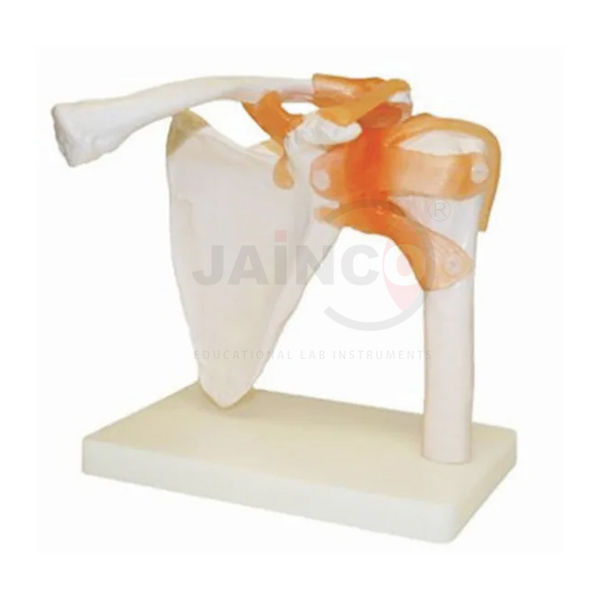
Product Code : SCL-OM-12342
The Shoulder Joint Model is a life-size PVC model of the shoulder joint on a stand, 16 x 12.5 x 20 cm. Flexible artificial ligaments hold the joint together, so it moves through abduction, adduction, anteversion, retroversion and internal and external rotation. It is used in anatomy, physiotherapy and orthopaedic teaching.
Specifications of the shoulder joint model
| Product code | JA-OM-12342 (earlier code SCL-OM-12342) |
|---|---|
| Size | Life size; 16 x 12.5 x 20 cm |
| Material | PVC |
| Mounting | On a stand |
| Ligaments | Flexible, artificial |
| Movements shown | Abduction; adduction; anteversion; retroversion; internal rotation; external rotation |
| Other sizes | Made in other sizes and designs to order |
| Manufacturer | JaincoLab, Ambala, India |
Teaching the shoulder with the joint model
- Six movements. Students move the humerus through each movement in turn while a partner names it and the plane it is in.
- Ligaments and stability. Move the joint to the end of its range and feel where the artificial ligaments tighten. Discuss why the shoulder trades stability for range of movement.
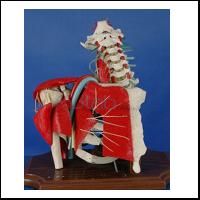
- Bones and muscles. Compare this model with the Shoulder With Muscles And Spines Model, which adds the muscles round the joint.
- Ball and socket compared. Set the shoulder beside the Hip Joint Model and compare the depth of the two sockets and the range each joint allows.
Frequently Asked Questions
Why is the shoulder so mobile but also easy to dislocate?
The head of the humerus is large and the glenoid socket is shallow, so the joint can move in many directions. The trade-off is little bony support. Ligaments, the capsule and the rotator cuff muscles hold the head in place. On the model, students see how freely the joint moves.
Which way does the shoulder usually dislocate?
Most shoulder dislocations are anterior. The head of the humerus slips forwards and down out of the socket, often after a fall on an outstretched arm turned outwards. Students can move the model into abduction with external rotation to see the position in which this happens.
Does the shoulder joint model show the rotator cuff?
No. It shows the bones of the joint and flexible artificial ligaments only. For the muscles round the shoulder, use the Shoulder With Muscles And Spines Model alongside it. Then link each movement to the muscles that produce it.
How does handling the model help students learn joint movements?
Moving the model by hand shows where each movement stops and which way the bones turn. That feel is hard to get from a diagram. Students remember the movements better when they have moved the joint themselves and named each one aloud.
Which product code should we use on an order for this shoulder model?
Use JA-OM-12342. The model was listed earlier under SCL-OM-12342, and that old code refers to the same model. Quote either code in your enquiry and it is matched to this listing.
What should a tender specify for a shoulder joint model?
State a life-size PVC shoulder joint on a stand, 16 x 12.5 x 20 cm, with flexible artificial ligaments. List the movements it must show: abduction, adduction, anteversion, retroversion and internal and external rotation.
Other joint models in the ortho range
See the Ortho Models range and more teaching models from JaincoLab, an anatomical models manufacturer in India.
For a quotation, send the product name and the quantity you need through our contact page. For tender or project supply, see our tenders page.